| Origin | Native to Southeast Asia. |
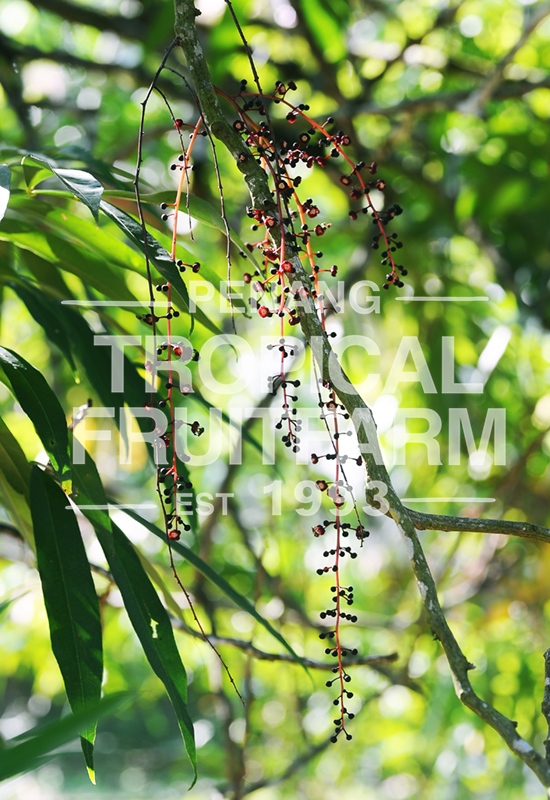
| Description | A rare attractive tree with young purple leaves turning to green and purple flower clusters. The globose fruits with 3 to 4 seeds are bright red. |
| Growth Habitat | Tropical areas of the world. |
| Foliage | Young leaves are a soft purple, growing opposite to each other on the stem in pairs or compound pinnate that eventually become dark green. They are tapered and winged, about 50cm in length. |
| Flowers | The scentless, pink to purple flowers grow on inflorescences, mostly unisexual, male and female growing on the same branch with short stems. |
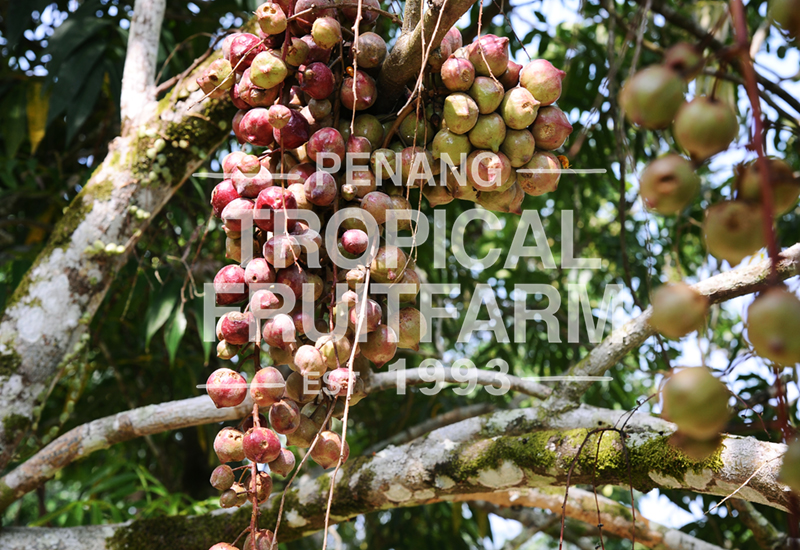
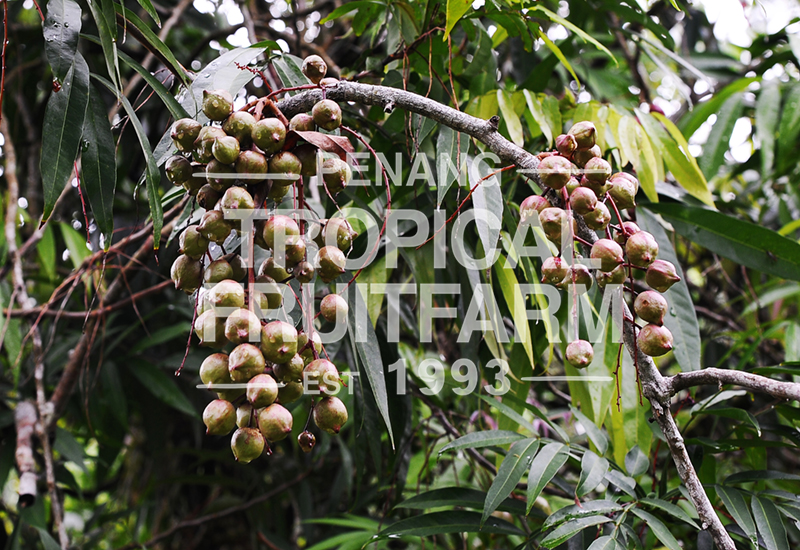
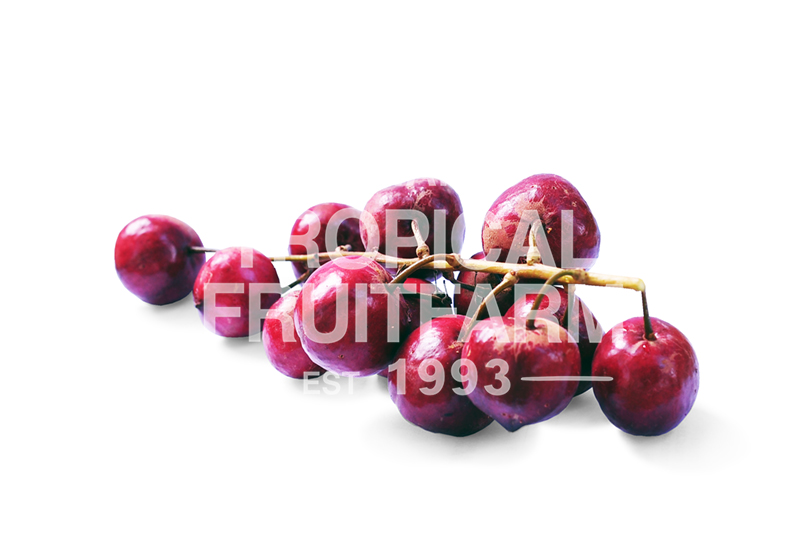
| Fruits | The Terengganu cherry is a globose berry, about 2 to 3cm in diameter. It grows in large clusters of 20 fruits that are a shiny, deep red with a pointed tip. Sweet but a little tart with 3 seeds per fruit. Flesh is yellow, sweet and crunchy and the skin can be astringent if not fully mature. |
| Harvest | Pick in clusters when the fruits turn to a deep red. If too young, the thin, outer skin is astringent or dries out the mouth. |
| Soil | Terengganu trees are often found in the tropical jungles of Southeast Asia with sandy to heavy clay soils. |
| Pruning | Prune to establish initial shape and to remove dead or diseased branches. |
| Fertilization | Tropical jungle trees rarely need fertilizing but if needed, fertilized with a complete fertilizer and manure. |
| Propagation | Can be propagated through seeds. |
| Nutritional Properties | 100g of Terengganu cherry contains 77.7% moisture, 9.5% dietary fibre, 0.8% sugar, 16mg of Vit C. |
| Health Benefits | The Vitamin C in Terengganu Cherry fruits could be beneficial for protection against immune system deficiencies, cardiovascular disease, prenatal health problems, eye disease, and even skin wrinkling. A tree similar to the Terengganu Cherry, Maa Wo from Thailand (Lepishanthes senegalensis) in the book “Medicinal Plants in Thailand”, uses its fruit as a tonic and in the treatment of cerebral malaria, fever with vertigo, chest pain, nosebleed and to relieve muscular spasm. |
| Commercial Uses | Terengganu cherry trees are often used as ornamental trees because of its attractive young, purple foliage and long, purple inflorescences that become bright, shiny, red clusters of fruit. |
| Food Suggestion | The young leaves are cooked and eaten as vegetables in South Thailand. |
Galleries